Plumbing Systems for Homes & Buildings: Design, Installation & Maintenance
A practical guide to plumbing systems for homes and buildings in Kenya, covering water supply, pipework, pressure, drainage, hot water and maintenance.
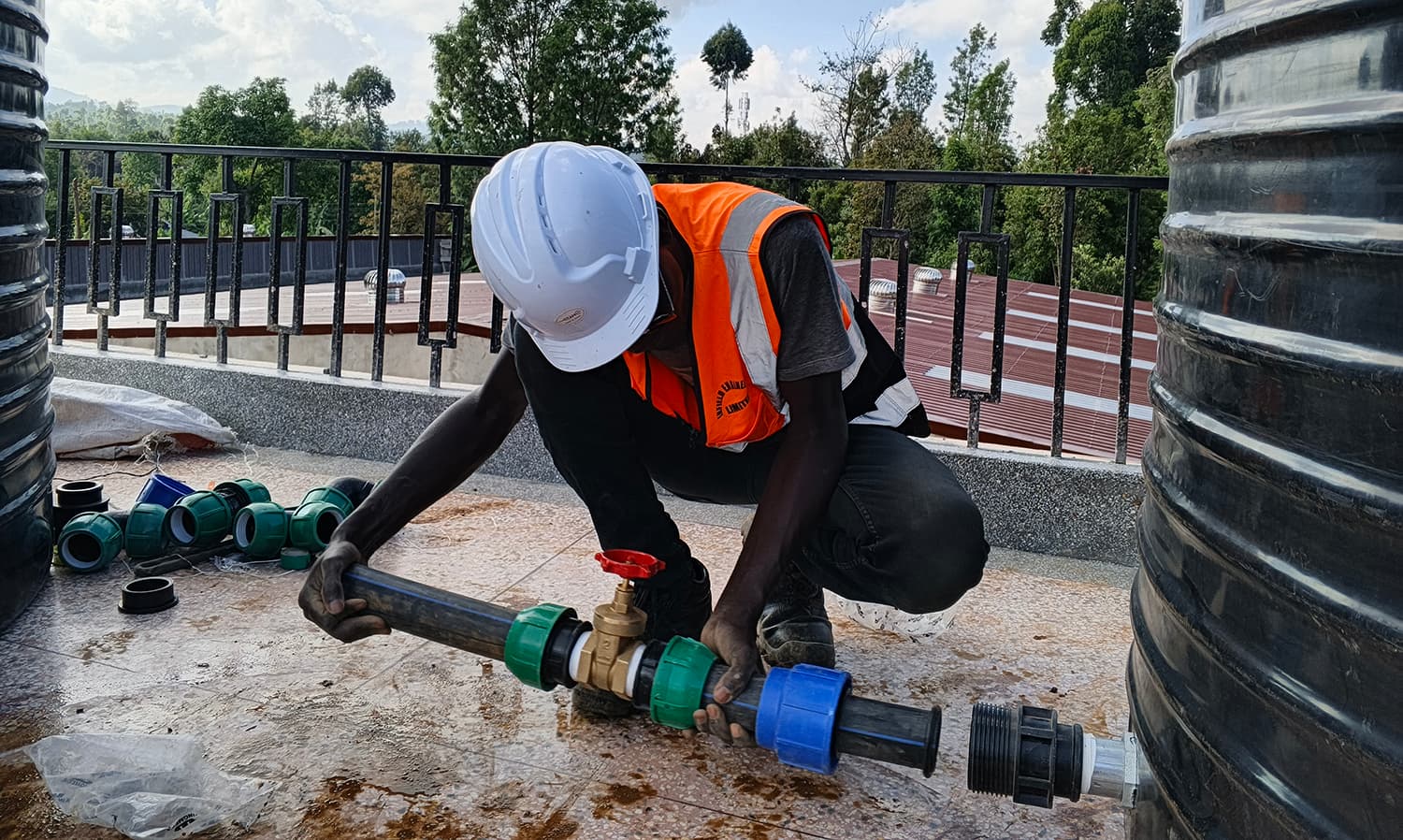
Key Takeaways
- A good plumbing system must provide adequate water flow, safe drainage and protection against contamination and backflow.
- Pipe materials should be selected according to pressure, temperature, water quality, application and installation conditions.
- Pump and pipe sizing should be based on peak demand, available pressure, elevation and friction losses.
- Proper installation, testing and routine maintenance reduce leaks, blockages and premature equipment failure.
How a Plumbing System Works
A building plumbing system has two main functions: deliver water where it is needed and safely remove wastewater. Depending on the property, water may come from a municipal connection, borehole, rainwater system, storage tank or a combination of sources.
A typical supply system includes storage where required, pumps or pressure controls, distribution pipework, valves and plumbing fixtures. Drainage carries wastewater to a public sewer, septic system or another approved disposal or treatment system.
Good design considers water demand, pressure, pipe sizing, access for maintenance, protection against contamination and the conditions of the site.
Choosing Pipe Materials
PP-R (PPR) is widely used for hot and cold water installations because it is lightweight, corrosion-resistant and joined by heat fusion. KEBS lists the KS ISO 15874 series for polypropylene piping systems used for hot and cold water installations inside buildings. ([kebs.org](https://webstore.kebs.org/index.php?product_id=5946&route=product%2Fproduct&utm_source=chatgpt.com))
PVC-U and other approved plastic piping systems are also used for appropriate water-supply and drainage applications. The correct material depends on pressure, temperature, exposure, installation method and the type of water being conveyed.
Do not select pipework by diameter alone. Pressure rating, jointing method, hydraulic demand and compatibility between pipes and fittings are all part of the specification.
Water Pressure and Drainage
Water pressure at a fixture depends on the supply pressure, elevation, pipe size, pipe length and friction losses. A system that performs poorly should therefore be assessed hydraulically rather than corrected by simply installing a larger pump.
Where available pressure is insufficient, a storage tank and booster pump can provide a more reliable supply. The pump should be selected for the required flow and total dynamic head, including elevation and pipe losses.
Drainage pipework should be laid to the gradients required by the design and applicable code. Traps, vents, access points and inspection chambers should be provided where required to maintain flow, prevent sewer gases from entering occupied spaces and allow cleaning or inspection.
The National Building Code, 2024 requires building drainage systems to be designed and constructed to carry the design hydraulic load and discharge to an appropriate approved disposal system. ([kenyalaw.org](https://new.kenyalaw.org/akn/ke/act/ln/2024/47/eng%402024-03-01/source?utm_source=chatgpt.com))
Hot Water Systems
Hot water may be produced using electric, gas, solar or other approved heating systems. The appropriate solution depends on demand, available energy sources, building type and operating cost.
Solar water heating can significantly reduce electricity used for hot-water production. Kenya's current Energy (Solar Water Heating) Regulations, 2025 require new premises to provide for a solar water heating system in their design and regulate the design, installation, testing, commissioning, maintenance and repair of these systems. ([kenyalaw.org](https://new.kenyalaw.org/akn/ke/act/ln/2025/115/eng%402025-07-09/source?utm_source=chatgpt.com))
Hot-water systems should include appropriate temperature and pressure protection, insulated storage where applicable, correctly specified pipework and a suitable backup arrangement where continuous hot-water supply is required.
Common Problems and Maintenance
Common plumbing problems include leaks, blocked drains, low pressure, faulty pumps, damaged valves and water-heater failures. The correct repair depends on identifying the underlying cause rather than repeatedly treating the symptom.
Check visible pipework, joints, valves and fixtures regularly for leaks or corrosion. Clean taps, showerheads and accessible filters when flow begins to reduce.
For pumps, tanks and water heaters, follow the manufacturer's service requirements. Drainage systems should also be inspected where recurring blockages, odours or slow discharge occur.
When a building undergoes renovation, additional bathrooms are added, or a new source such as a borehole or rainwater system is connected, the existing plumbing should be reassessed for capacity and pressure rather than extended without review.
Kenya Standards and Requirements
Plumbing works should comply with the applicable National Building Code, Kenya Standards and project specifications. Potable water used for direct human consumption is covered by KS EAS 12:2018, while PP-R hot- and cold-water systems are addressed by the KS ISO 15874 series. ([webstore.kebs.org](https://webstore.kebs.org/index.php?product_id=14909&route=product%2Fproduct&utm_source=chatgpt.com))
Solar water heating systems are additionally governed by the Energy (Solar Water Heating) Regulations, 2025. The Regulations require persons carrying out installation, testing, commissioning, maintenance or repair to hold the appropriate EPRA licence. ([epra.go.ke](https://www.epra.go.ke/extras/legal/web/site/regulations-public?utm_source=chatgpt.com))
Good plumbing practice also requires proper testing and commissioning before concealed pipework is closed up, together with documentation of equipment, valves and maintenance requirements.
Before You Proceed
For a successful outcome, make sure you have:
- Design water supply and drainage as one coordinated system.
- Select pipework according to application, pressure, temperature and applicable standards.
- Size pumps and pipes from actual peak demand and system losses.
- Make valves, pumps, tanks, filters and other serviceable components accessible for maintenance.
Frequently Asked Questions
What is the best pipe material for a house in Kenya?
There is no single best material for every application. PP-R (PPR) is widely used for hot and cold water installations, while PVC-U and other approved plastic systems are commonly used for cold-water and drainage applications. Material selection should follow the system design, pressure and temperature requirements and applicable standards.
Why is my water pressure low?
Common causes include inadequate source pressure, undersized pipes, excessive pipe length, blocked filters or fittings, elevation differences and pump problems. Pressure should be measured at the source and at representative fixtures before deciding on an upgrade.
Is solar water heating required in Kenya?
Kenya's Energy (Solar Water Heating) Regulations, 2025 require new premises to make provision for solar water heating in their design. The Regulations also require solar water heating work to be carried out by appropriately licensed workers and contractors. ([kenyalaw.org](https://new.kenyalaw.org/akn/ke/act/ln/2025/115/eng%402025-07-09/source?utm_source=chatgpt.com))
How often should plumbing be maintained?
Inspect visible pipework, valves, pumps and fittings regularly for leaks or deterioration. Clean fixtures and filters as needed, and service water heaters, pumps, storage tanks and drainage systems according to the equipment manufacturer's recommendations and site conditions.
Conclusion
A practical guide to plumbing systems for homes and buildings in Kenya, covering water supply, pipework, pressure, drainage, hot water and maintenance. For tailored advice specific to your situation, consult with our qualified engineers who can assess your needs and recommend the right approach.
Need a Plumbing Assessment?
We can assess your water supply, pressure, pipework, drainage and hot-water system and recommend practical improvements.
Sources & References
- National Building Code, 2024 — Kenya
- Energy (Solar Water Heating) Regulations, 2025 — Kenya
- KEBS — KS ISO 15874 series: Polypropylene piping systems for hot and cold water installations
- KEBS — KS EAS 12:2018, Potable Water — Specification
Related Services
Services directly connected to this article.
Plumbing
Comprehensive plumbing services including repairs, installations, drain cleaning, and water heater services for homes and businesses.
Learn MoreWater Storage
Comprehensive water storage solutions — from domestic plastic tanks to large-capacity commercial reservoirs and elevated water towers.
Learn MoreSolar
Solar panel installation, hybrid and off-grid systems, battery storage, solar water heating and solar pumping for homes, businesses and farms.
Learn More