Irrigation System Design in Kenya: Drip, Sprinkler & Sizing
A practical guide to choosing, sizing and maintaining irrigation systems in Kenya, including drip and sprinkler irrigation, water requirements, pumping and automation.
Key Takeaways
- Choose the irrigation method according to the crop, soil, terrain, water availability and operating requirements.
- Crop water demand should be calculated from local climate, crop characteristics, growth stage and effective rainfall.
- Pump, pipe, filtration and irrigation components must be sized as one system to achieve uniform application.
- Solar pumping and automation can improve operating efficiency, but their value depends on proper system design and management.
Choosing the Right Irrigation Method
The right irrigation system depends on the crop, soil, terrain, available water and required operating conditions. The main options for farms and landscaped properties are drip and sprinkler irrigation.
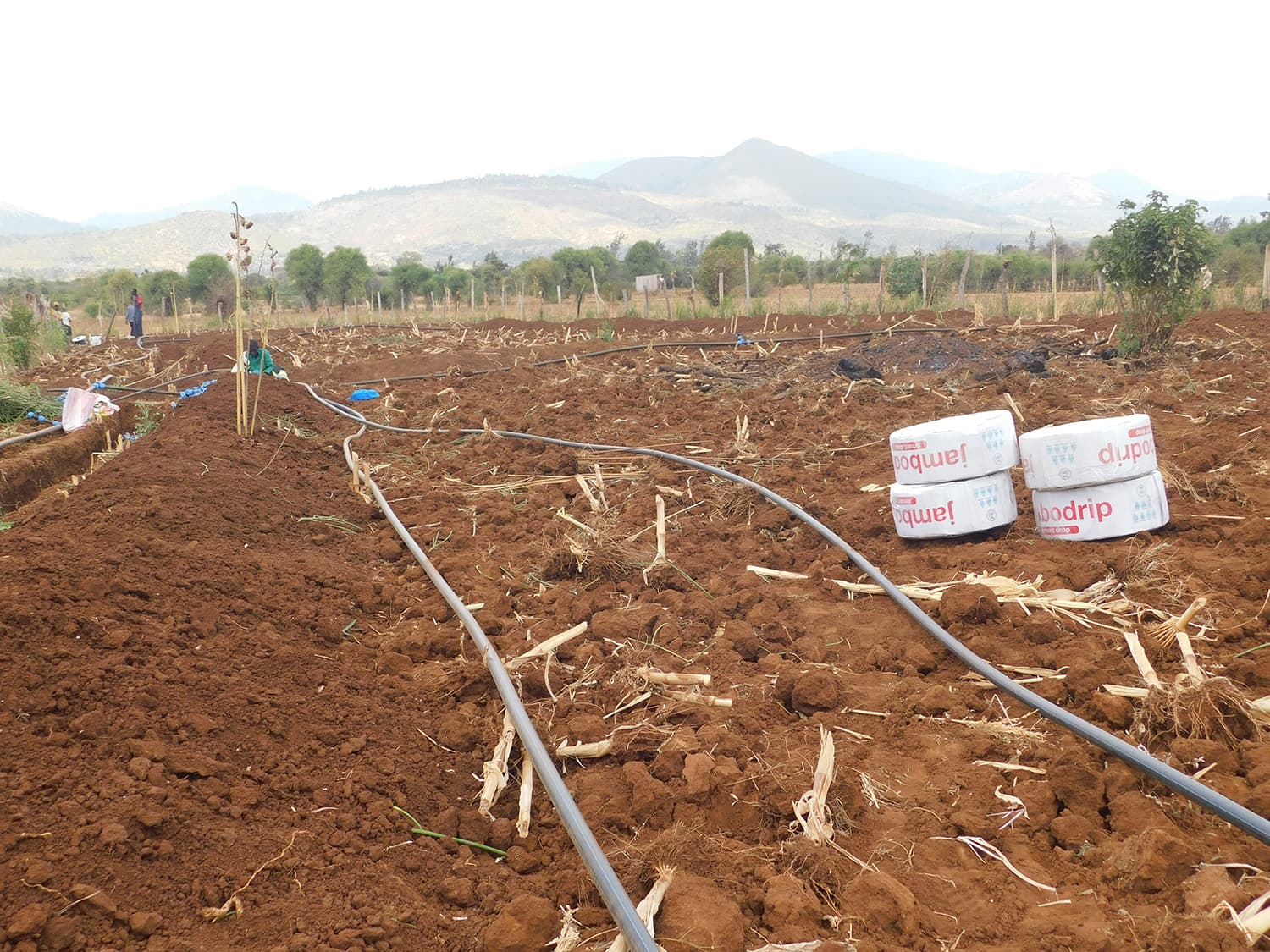
Drip irrigation applies water close to the plant root zone through emitters. It is well suited to vegetables, row crops, orchards and other crops where precise application is beneficial. Sprinkler irrigation distributes water over a wider area and is useful for pasture, lawns, cereals and closely spaced crops.
There is no single system that is best for every site. Good design matches the irrigation method to the agronomic and physical conditions of the property.
Drip vs Sprinkler
Drip generally has lower losses from wind drift and surface evaporation because water is applied near the crop. It also works well with fertigation and can be divided into small irrigation zones.
Sprinkler systems provide broader and more uniform coverage when correctly designed. They are often suitable where the crop requires wider wetting or where individual drip lines are impractical. Their performance can be affected by wind, pressure variation and sprinkler spacing.
The decision should therefore consider crop type, field geometry, slope, soil infiltration, available water, required pressure and maintenance requirements rather than efficiency figures alone.
Calculating Water Requirements
Irrigation demand should be based on crop water requirement rather than a fixed litres-per-acre figure. A common calculation uses reference evapotranspiration (ETo), the crop coefficient (Kc), effective rainfall and irrigation efficiency.
In simplified form: crop evapotranspiration is estimated from ETo × Kc. The irrigation requirement is then adjusted for useful rainfall and the performance of the irrigation system. Crop coefficients change with crop type and growth stage. :contentReference[oaicite:2]{index=2}
For detailed design, use reliable local climate and crop data rather than assuming that every farm has the same daily water requirement.
Designing the Irrigation System
A complete system normally includes the water source, pump, mainline, submains, valves, filtration, pressure control and field application equipment.
Pump selection should be based on the required flow and total dynamic head, including elevation and friction losses. Pipe sizes should then be checked for acceptable pressure loss and the required flow in each irrigation zone.
Zone design is particularly important. Dividing a large field into manageable zones allows the pump to operate within its capacity and helps maintain more consistent pressure and application across the system.
Solar Pumping and Automation
Solar pumping can reduce dependence on grid electricity or diesel, particularly where irrigation demand coincides with daylight hours. A common arrangement is to pump water into a storage tank and irrigate from the tank according to the crop schedule.
Water storage can therefore act as an alternative to electrical battery storage in many solar irrigation applications. The pump and solar array must still be sized for the required flow, head, available solar resource and operating schedule.
Automation can include timers, solenoid valves, tank-level controls, pressure monitoring and soil-moisture sensors. These tools can improve control, but their benefit depends on correct setup and management rather than the technology alone.
Maintenance and Kenya Requirements
Regular maintenance protects irrigation performance. Check filters, valves, pipes, emitters and sprinkler heads for blockage, leakage or uneven application. Flush irrigation lines as required and maintain pumps and controls according to manufacturer instructions.
For drip systems, filtration is especially important. Select the filtration level according to the water source and the manufacturer's requirements for the installed emitters. Water containing significant sediment, algae or dissolved minerals may require additional treatment.
In Kenya, irrigation development is governed by the Irrigation Act, 2019 and the Irrigation (General) Regulations, 2021. Irrigation projects are expected to consider water availability, efficient water use, quality, environmental sustainability and applicable statutory requirements. :contentReference[oaicite:3]{index=3}
Where a project involves abstraction, storage or development of irrigation infrastructure, the applicable water and irrigation approvals should be confirmed before construction.
Before You Proceed
For a successful outcome, make sure you have:
- Select the irrigation method based on crop, soil, terrain and water availability.
- Calculate peak water demand before sizing the pump and pipework.
- Use appropriate filtration and pressure control, especially on drip systems.
- Consider storage, solar pumping and automation where they improve system reliability or operating efficiency.
Frequently Asked Questions
Which is better: drip or sprinkler irrigation?
Neither is universally better. Drip is generally suited to row crops, vegetables, orchards and situations where precise root-zone application is important. Sprinklers are useful for lawns, pasture, cereals and crops requiring broader area coverage. The choice should be based on crop, soil, terrain, water availability and required operating pressure.
How do I calculate irrigation water requirements?
Start with reference evapotranspiration (ETo), apply the appropriate crop coefficient (Kc), then account for effective rainfall and system losses. The result varies with crop, growth stage, climate and soil, so fixed litres-per-day figures should not be used for detailed design.
Can irrigation run on solar power?
Yes. Solar pumping is well suited to irrigation because pumping can occur during daylight when solar energy is available. Water can be stored in a tank and applied to crops according to the irrigation schedule, reducing the need for battery storage in many systems.
Does drip irrigation need filtration?
Yes. Filtration is normally essential for drip irrigation because emitters can be affected by sediment, algae and mineral deposits. The filter type and filtration level should be selected according to the water quality and the irrigation equipment manufacturer's requirements.
Conclusion
A practical guide to choosing, sizing and maintaining irrigation systems in Kenya, including drip and sprinkler irrigation, water requirements, pumping and automation. For tailored advice specific to your situation, consult with our qualified engineers who can assess your needs and recommend the right approach.
Need an Irrigation System Designed?
We can assess your water source, crop requirements, soil, field layout and pumping conditions to develop a practical irrigation solution.
Sources & References
- Irrigation Act, 2019 — Kenya
- Irrigation (General) Regulations, 2021 — Kenya
- National Irrigation Authority — Survey and Design of Irrigation Projects / Final Irrigation Guidelines
- FAO — Revised Crop Evapotranspiration: Guidelines for Computing Crop Water Requirements, 2025
Related Services
Services directly connected to this article.
Irrigation
Design, installation, and maintenance of efficient irrigation systems that keep your landscape thriving while conserving water.
Learn MoreSolar
Solar panel installation, hybrid and off-grid systems, battery storage, solar water heating and solar pumping for homes, businesses and farms.
Learn MoreBoreholes
Professional borehole drilling, pump installation, and water treatment services for residential, agricultural, and commercial water needs.
Learn MoreWater Storage
Comprehensive water storage solutions — from domestic plastic tanks to large-capacity commercial reservoirs and elevated water towers.
Learn More