Borehole Drilling in Kenya: Process, Cost & What to Expect
A practical guide to borehole development in Kenya — from hydrogeological assessment and approvals to drilling, test pumping, water-quality testing, pumping systems, and handover.
Key Takeaways
- Start with a hydrogeological assessment and confirm the required approvals before drilling.
- Borehole depth, geology, casing, yield and intended use all influence project cost and system design.
- Test pumping is essential for determining borehole performance and selecting a suitable pump.
- Borehole water should be tested before it is used for drinking or other applications with specific quality requirements.
- Solar pumping can be a practical option where grid power is unavailable or expensive, especially when water is stored in tanks.
Before You Drill
A borehole is a site-specific water-supply project, so drilling should begin with a hydrogeological assessment. The assessment reviews local geology and groundwater information and uses field investigations to identify a suitable drilling location and expected conditions.
The intended use should be established at the same stage. A household, farm, school, commercial property and industrial site can have very different water demands. That demand affects the target yield, storage, pump duty and overall system design.
In Kenya, groundwater development is regulated by the Water Resources Authority (WRA). Its current process includes technical assessment, authorization to construct groundwater works, submission of completion and water-quality information, inspection and eventual issuance of the water-use permit. Environmental assessment requirements may also apply to groundwater development projects. citeturn663725search0turn663725search12
The Drilling Process
Once the required approvals are in place, the drilling contractor mobilises the rig and support equipment. The drilling method is selected according to the ground conditions, commonly using rotary or down-the-hole techniques.
Drilling is logged as it progresses so that the encountered formations and water-bearing zones are recorded. The borehole is then constructed with suitable casing and screened sections, developed to remove drilling debris, and prepared for testing. Construction should follow applicable WRA requirements and professional groundwater practice.
The completed borehole record is important for future pump replacement, maintenance, water-level monitoring and performance assessment.
Yield and Test Pumping
A borehole's depth does not, by itself, tell you how much water it can sustainably supply. Yield must be established from the borehole's response to pumping.
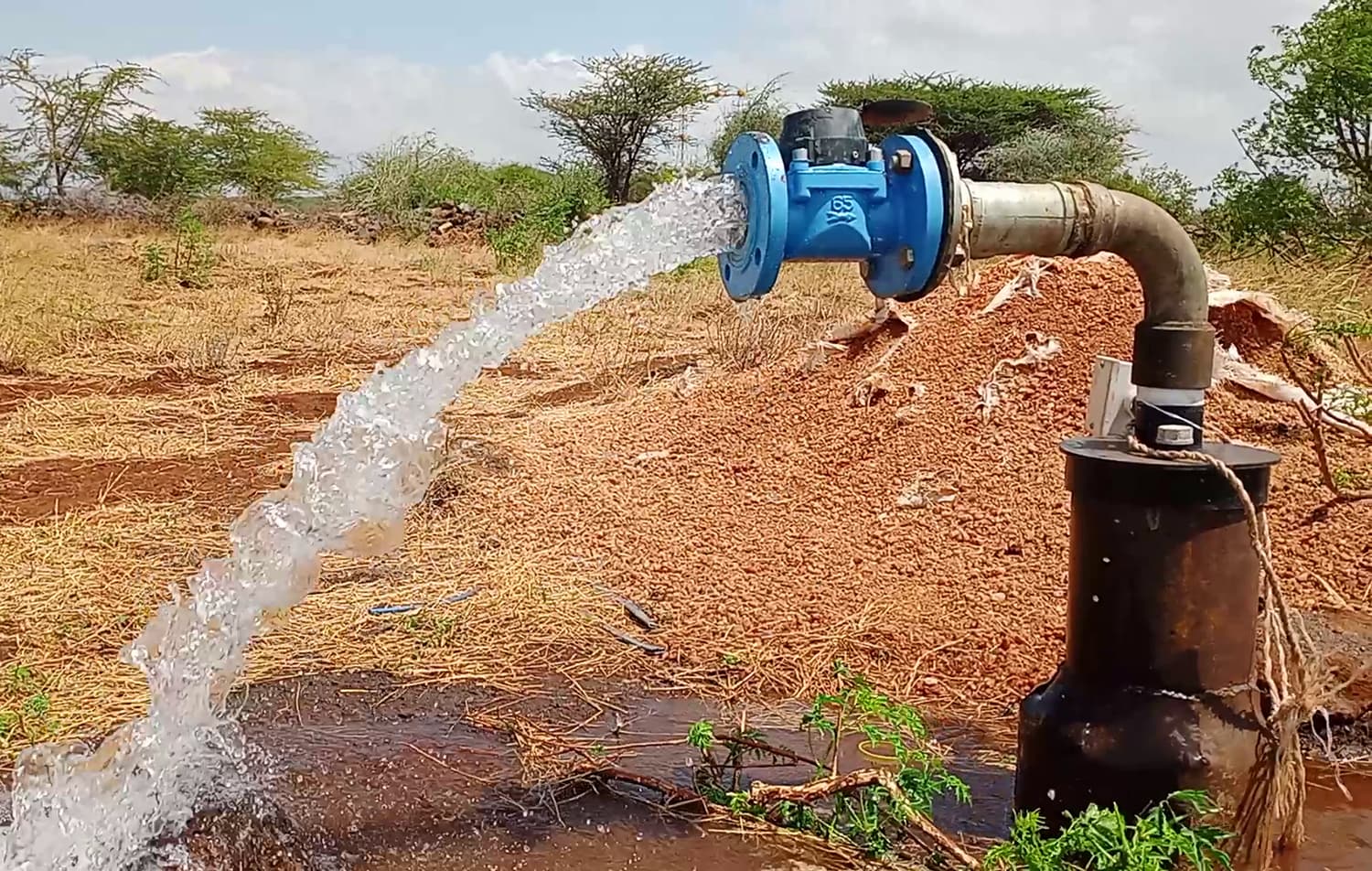
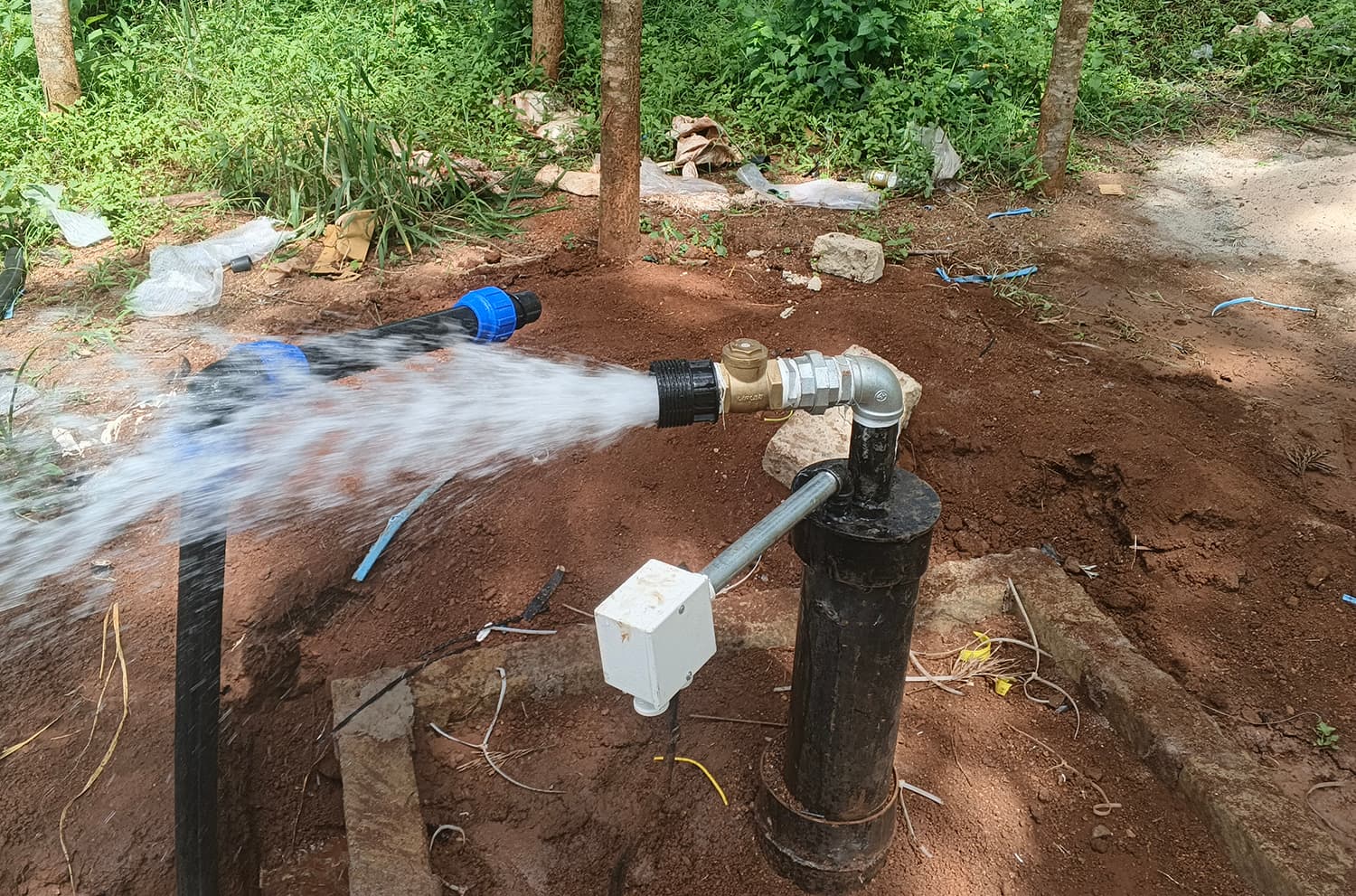
Test pumping records the static water level, pumping rate, drawdown and recovery. The results help determine a suitable operating rate and provide the basis for pump selection and storage design. WRA specifically recognises borehole pumping tests as part of responsible groundwater development. citeturn663725search5turn663725search44
The objective is not simply to obtain the highest possible flow. The pump should be selected so that abstraction remains compatible with the borehole's demonstrated performance and the required daily water demand.
Water Quality and Pump Selection
Clear water is not necessarily safe water. After development and testing, samples should be analysed for parameters relevant to the intended use. Drinking-water supplies require particular attention to microbiological and chemical quality, while irrigation and other applications may require different tests.
Treatment should be designed from the laboratory results. Depending on the water characteristics, treatment may involve filtration, disinfection, softening or other processes. It should not be specified purely from assumptions about the location.
Pump selection is based on required flow, total dynamic head, borehole dimensions, operating conditions and test results. Solar, grid-powered or generator-backed pumping can all be appropriate; the choice depends on the site's energy supply and operating requirements.
Cost and Project Timeline
Borehole cost varies substantially between sites. The main cost drivers are drilling depth, geology, casing and screen requirements, drilling conditions, test pumping, the pump and control system, storage, power supply and site access. Published cost-per-metre figures should therefore be treated only as broad market indicators, not guaranteed project prices.
Timelines also vary. Survey, approvals, drilling, construction, testing and commissioning each take different amounts of time, and regulatory processing can extend the programme. A realistic schedule should be issued after the site assessment and approval requirements are understood.
A good quotation should be itemised so the client can see the costs of drilling, construction, testing, pumping equipment, storage, power systems, approvals and site-specific works.
Handover and Maintenance
At handover, the client should receive the borehole and completion records, test-pumping information, water-quality results, pump and control-system details, and relevant approval documentation. These records establish the baseline for future servicing and performance checks.
Maintenance is straightforward but should not be ignored. Monitor water levels and pump performance, inspect electrical and control equipment, maintain storage and treatment equipment, and retest water quality when required by the intended use or when conditions change.
A borehole is a long-term water asset. Good siting, construction, testing, documentation and maintenance are what turn a drilled hole into a dependable water-supply system.
Before You Proceed
For a successful outcome, make sure you have:
- Carry out the hydrogeological assessment before drilling.
- Confirm WRA and any other applicable approvals before works begin.
- Use test-pumping results to determine sustainable yield and pump selection.
- Test water quality before using the borehole for drinking or other sensitive applications.
- Provide suitable storage, protection and maintenance access as part of the complete water system.
From the Field
A farm required a more reliable water source for domestic use and irrigation.
The site was assessed for groundwater potential, water demand, pumping requirements and the approvals required for development.
The project combined borehole development, test pumping, an appropriately sized submersible pump and water storage, with solar pumping considered where suitable.
The borehole was drilled, constructed, developed, tested and commissioned, followed by installation of the pumping and storage system.
The system provided a structured and maintainable water supply matched to the borehole's demonstrated performance and the site's demand.
Frequently Asked Questions
How much does a borehole cost in Kenya?
There is no reliable single price for a borehole. Cost depends mainly on drilling depth, geology, casing and screen requirements, test pumping, the pump system, storage and site conditions. A professional quotation should be based on the hydrogeological assessment and the actual construction requirements.
Do I need approval before drilling a borehole?
Yes. Groundwater development is regulated in Kenya. WRA's current process includes application assessment, authorization to construct the works, submission of completion and water-quality information, inspection and eventual issuance of the water-use permit. Environmental requirements may also apply depending on the project.
How do I know how much water a borehole can supply?
You cannot reliably determine sustainable yield from drilling depth alone. Test pumping measures water-level response and recovery at defined pumping rates and provides the information needed to select the pump and plan storage.
Is borehole water safe to drink?
Not automatically. Water should be analysed by a competent laboratory against the requirements for its intended use before a drinking-water system is commissioned. Treatment should be selected from the test results rather than assumed in advance.
Can a borehole pump run on solar power?
Yes. Solar-powered pumping is well suited to many sites, particularly where grid electricity is unavailable or unreliable. The pump and solar array are sized from the required water volume, pumping head, borehole performance and available solar resource. Water tanks are commonly used to provide storage instead of large battery banks.
Conclusion
A practical guide to borehole development in Kenya — from hydrogeological assessment and approvals to drilling, test pumping, water-quality testing, pumping systems, and handover. For tailored advice specific to your situation, consult with our qualified engineers who can assess your needs and recommend the right approach.
Planning a Borehole?
We can assess the site, coordinate approvals, drill and test the borehole, and integrate pumping, storage and solar power where appropriate.
Sources & References
- Water Resources Authority (WRA), Kenya — Water Resources Regulations and permitting guidance
- National Environment Management Authority (NEMA), Kenya — Environmental Impact Assessment requirements
- Kenya Bureau of Standards (KEBS) — applicable water-quality standards
- World Health Organization — Guidelines for Drinking-water Quality
Related Services
Services directly connected to this article.
Boreholes
Professional borehole drilling, pump installation, and water treatment services for residential, agricultural, and commercial water needs.
Learn MoreSolar
Solar panel installation, hybrid and off-grid systems, battery storage, solar water heating and solar pumping for homes, businesses and farms.
Learn MoreWater Storage
Comprehensive water storage solutions — from domestic plastic tanks to large-capacity commercial reservoirs and elevated water towers.
Learn MoreIrrigation
Design, installation, and maintenance of efficient irrigation systems that keep your landscape thriving while conserving water.
Learn MoreContinue Exploring
Related guides and insights from our knowledge centre.